How to evaluate affiliate programs for iGaming success

Choosing the wrong iGaming affiliate program can cost you months of effort and thousands in lost revenue. Many affiliates rush into partnerships without thoroughly evaluating commission structures, payment reliability, or program transparency. This guide walks you through a systematic approach to assess affiliate programs, helping you identify partnerships that align with your traffic sources, revenue goals, and long-term growth strategy. You’ll learn exactly what to examine before committing to any program.
Table of Contents
- Key takeaways
- Understanding your needs and prerequisites
- Step-by-step: how to analyze affiliate program offers
- Evaluating program reliability and support quality
- Common mistakes to avoid and verifying your choice
- Enhance your iGaming affiliate strategy with Affiliate Roulette
- FAQ
Key Takeaways
| Point | Details |
|---|---|
| Define needs and goals | Identify your traffic volume audience demographics and revenue targets to guide program selection and prevent costly mismatches. |
| Evaluate commission models | Look for transparent dashboards reliable payments clear payout terms and prompt support to avoid disputes. |
| Check compliance and licensing | Compare regulatory requirements and ensure programs align with your target markets to prevent compliance headaches later. |
| Test with small traffic | Run a small pilot with two programs to validate tracking accuracy and response times before scaling. |
Understanding your needs and prerequisites
Before diving into program comparisons, you need a clear picture of what you’re bringing to the table and what you need from a partnership. Your traffic volume, audience demographics, and marketing channels directly influence which types of affiliate programs in igaming will work best for your operation.
Start by defining specific revenue targets and timeline expectations. Are you building for quick wins or sustainable long-term income? High-quality traffic from engaged players typically performs better with revenue share models, while high-volume traffic sources might benefit more from CPA arrangements. Choosing the right affiliate program depends on matching your traffic, niche, and revenue goals, so honest self-assessment prevents costly mismatches.
Your marketing channels matter significantly. If you operate content sites with organic search traffic, you’ll need programs offering strong SEO tools and long cookie durations. Social media marketers require different creative assets and tracking capabilities than paid traffic specialists. Email marketers need programs with high email conversion rates and flexible promotional materials.
Regulatory compliance requirements vary dramatically by jurisdiction. Some programs restrict affiliates from promoting in certain regions, while others require specific disclaimers or responsible gambling messaging. Understanding these constraints upfront saves you from compliance headaches later. Check whether programs align with regulations in your target markets before investing time in evaluation.
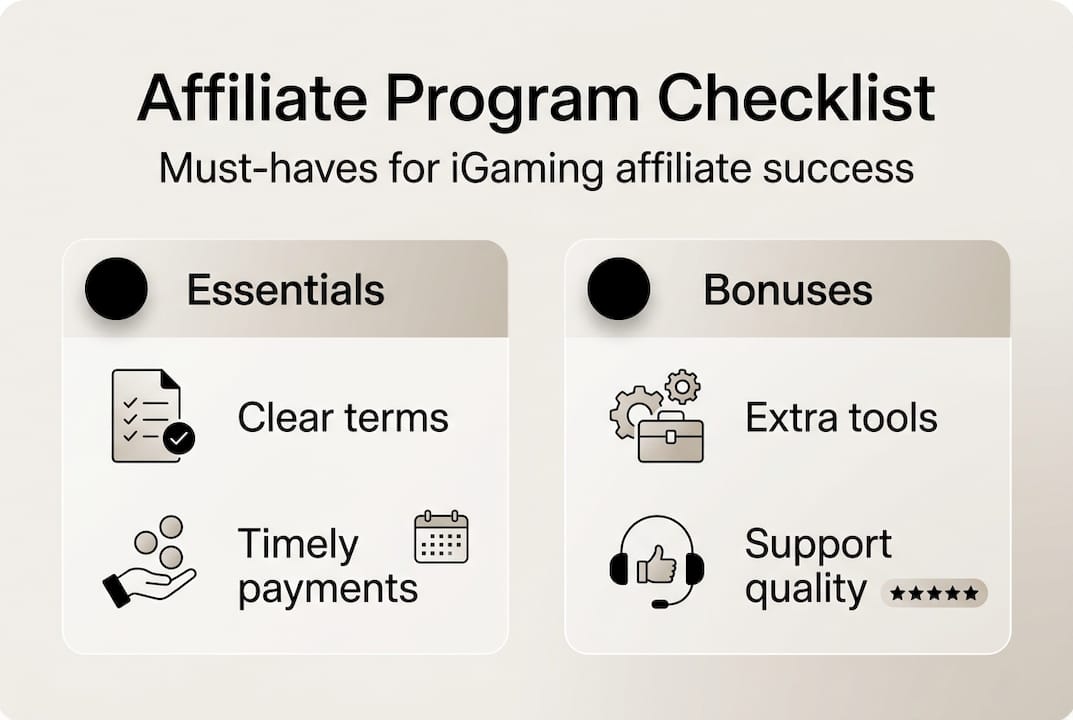
Create a detailed checklist covering must-have features versus nice-to-have bonuses. Essential items might include minimum payout thresholds you can realistically reach, reporting granularity for optimization, and payment methods that work in your location. Deal breakers could include negative carryover policies, restrictive marketing guidelines, or programs operating without proper licensing.
Pro Tip: Start with one or two programs offering transparent reporting dashboards and responsive support. Test them with a small traffic allocation to validate tracking accuracy and payment reliability before scaling your promotional efforts or adding more programs to your portfolio.
Step-by-step: how to analyze affiliate program offers
Systematic analysis prevents you from missing critical details buried in program terms. Begin by collecting offers from multiple programs and organizing them for side-by-side comparison. Focus first on commission structures, as these directly determine your earning potential.
Revenue share programs pay you a percentage of the net revenue generated by players you refer. Percentages typically range from 25% to 50%, with some premium programs offering tiered structures that increase as you refer more valuable players. Understanding payment models and payout structures is essential to choosing profitable programs, so examine whether percentages apply to gross gaming revenue or net revenue after bonuses and chargebacks.
CPA (cost per acquisition) programs pay fixed amounts for each qualified player registration or first deposit. Rates vary widely based on player quality requirements and geographic targeting, ranging from $50 to $300 per player. Hybrid models combine upfront CPA payments with ongoing revenue share, offering both immediate cash flow and long-term earning potential.
Here’s how common commission models compare:
| Model Type | Payment Structure | Best For | Risk Level |
|—|—|—|
| Revenue Share | 25-50% of player losses | Quality traffic, long-term focus | Low (no negative months) |
| CPA | $50-$300 per player | High volume traffic, quick returns | Medium (depends on conversion) |
| Hybrid | CPA + reduced revenue share | Balanced approach | Low to Medium |
| Tiered Revenue | Increases with performance | Scalable operations | Low |
Examine payment terms carefully. Monthly payments are standard, but some programs pay bi-weekly or require minimum balance thresholds before releasing funds. A $100 minimum might seem reasonable until you realize it takes three months to reach it with your current traffic levels. Payment methods matter too, wire transfers often carry fees that eat into smaller payouts, while e-wallets offer faster, cheaper alternatives.
Cookie duration determines how long you receive credit for referred players. Thirty-day cookies are common, but lifetime cookies ensure you earn from players regardless of when they return to the casino. This distinction dramatically impacts earnings from content marketing, where players often research extensively before registering.
Player retention terms reveal how programs handle inactive players or those who stop generating revenue. Some programs implement negative carryover, where your account goes negative if players win big, requiring future commissions to offset losses. Others use no-negative-carryover policies, protecting you from owing the program money. This single factor can make or break profitability during variance swings.
Tracking accuracy directly affects your earnings. Request information about the tracking platform, sub-ID capabilities for campaign optimization, and real-time reporting features. Programs using outdated tracking technology or lacking granular data make optimization nearly impossible.
Pro Tip: Negotiate terms before signing, especially if you bring significant traffic or specialized audience access. Programs often offer improved percentages, reduced minimums, or custom payment schedules to affiliates demonstrating strong potential or proven track records in the industry.
Evaluating program reliability and support quality
Financial terms mean nothing if the program doesn’t pay on time or disappears after six months. Reputation research protects you from scams and unreliable partners that damage your credibility with your audience.

Search for affiliate reviews on industry forums, social media groups, and affiliate networks. Look specifically for complaints about delayed payments, sudden terms changes, or unresponsive management. A few negative reviews are normal, but patterns of similar complaints signal serious problems. Reliable payments, strong compliance, and responsive support build affiliate trust and long-term partnerships, making reputation checks essential due diligence.
Payment history verification goes beyond reading reviews. Contact existing affiliates directly through LinkedIn or industry networks to ask about their experience. Most successful affiliates willingly share insights about programs they trust. Ask specific questions about payment timing, dispute resolution, and whether the program honors its stated terms consistently.
Compliance standards protect both you and your audience. Verify that programs hold legitimate gambling licenses from recognized jurisdictions like Malta, Curacao, or the UK. Licensed operators face regulatory oversight ensuring fair play, responsible gambling measures, and financial stability. Unlicensed operations carry enormous risk, potentially exposing you to legal liability and guaranteed reputational damage.
Responsible gambling features demonstrate program integrity. Look for self-exclusion tools, deposit limits, and clear problem gambling resources. Programs prioritizing player welfare tend to operate more ethically across all business aspects, including affiliate relationships. This consideration also protects your brand reputation when promoting these operators.
Affiliate manager quality significantly impacts your success. Responsive managers provide optimization advice, resolve tracking discrepancies quickly, and advocate for you within their organization. During initial conversations, assess their knowledge, responsiveness, and willingness to provide detailed answers. Managers who dodge questions or make unrealistic promises often signal deeper program issues.
Reporting dashboard quality reveals operational sophistication. Request demo access to evaluate real-time data availability, filtering options, and export capabilities. You need granular data showing performance by traffic source, creative, and geographic region to optimize effectively. Programs offering only basic monthly summaries make data-driven decisions impossible.
Fraud protection measures benefit everyone in the partnership. Programs actively monitoring for bonus abuse, multi-accounting, and affiliate fraud create healthier ecosystems with better long-term sustainability. Ask how programs detect and handle fraudulent player activity and whether affiliates face penalties for unknowingly referring problem accounts.
Common mistakes to avoid and verifying your choice
Even experienced affiliates make evaluation errors that cost them significantly. Learning from common mistakes accelerates your path to profitable partnerships while avoiding expensive lessons.
Ignoring payment terms fine print ranks among the most costly errors. Many affiliates make errors such as ignoring fine print or overvaluing upfront bonuses, particularly around negative carryover policies that can wipe out months of earnings during unlucky variance swings. Read every clause about player chargebacks, bonus abuse deductions, and administrative fees that reduce your actual payout.
Relying solely on marketing promises sets you up for disappointment. Affiliate managers naturally emphasize positive aspects while downplaying limitations or risks. Cross-reference every claim with independent sources, existing affiliate testimonials, and direct testing. Programs promising unrealistic conversion rates or earnings often fail to deliver once you start sending traffic.
Poor tracking systems waste your marketing budget and optimization time. Some programs use outdated technology that misattributes conversions, drops cookies prematurely, or fails to track mobile traffic accurately. These technical failures directly reduce your earnings while making performance analysis impossible. Always test tracking thoroughly before committing significant traffic.
Neglecting support responsiveness creates frustration during critical moments. When tracking issues arise or payments get delayed, you need fast resolution to maintain cash flow and trust with your audience. Programs with slow or unhelpful support turn minor problems into major headaches. Test support quality by asking detailed questions during evaluation and noting response times and helpfulness.
Overvaluing signup bonuses relative to ongoing commission structures leads to poor long-term decisions. A $500 signup bonus looks attractive, but it’s meaningless if the revenue share percentage is 10 points lower than competitors. Calculate lifetime value based on your typical player volume and retention to make accurate comparisons.
Verify everything through pilot testing before full commitment. Set up tracking with a small traffic segment, typically 5-10% of your total volume. Monitor for accurate conversion attribution, proper commission calculations, and timely reporting updates. Run this test for at least one full payment cycle to confirm the program delivers on its promises.
“Verifying every term and running tests prevents costly partnership mistakes. The few weeks spent on due diligence saves months of lost revenue and damaged relationships with your audience.”
Seek feedback from affiliates who’ve worked with the program for at least six months. Their experience reveals how programs handle growth, disputes, and market changes. Recent reviews matter more than old testimonials, as programs can deteriorate over time through management changes or financial pressures.
Document everything in writing. Get commission rates, payment terms, and special agreements confirmed via email before signing contracts. Verbal promises mean nothing when disputes arise. Written documentation protects you if programs attempt to change terms retroactively or dispute payment calculations.
Review common issues new igaming affiliates encounter to understand pitfalls others have faced. Learning from the community’s collective experience helps you avoid repeating mistakes that have cost others time and money.
Enhance your iGaming affiliate strategy with Affiliate Roulette
Selecting the right affiliate programs is just the beginning of building a successful iGaming affiliate business. You need ongoing education, industry insights, and proven strategies to maximize your partnership revenue and stay ahead of market changes.

Affiliate Roulette provides comprehensive resources specifically designed for iGaming affiliates and operators seeking to optimize their partnerships. Our beginners guide to casino and betting affiliation covers foundational concepts, while advanced guides help experienced marketers refine their approach. Explore best practices for affiliate networks to understand what separates top performers from struggling affiliates. Our platform connects you with verified programs, provides honest reviews, and offers community insights that accelerate your learning curve. Discover strategies for igaming affiliate marketing maximizing roi and transform your affiliate business from guesswork into a data-driven operation.
FAQ
What factors most impact affiliate program profitability?
Commission percentage directly determines your earnings per player, but conversion rates and player lifetime value matter equally. Programs with 30% revenue share but high-converting offers often outperform 50% programs with poor player retention. Payment reliability and tracking accuracy also significantly impact actual received revenue versus theoretical earnings.
How can I verify an affiliate program’s payment reliability?
Search affiliate forums and social media groups for payment complaints or praise from current partners. Contact existing affiliates directly through LinkedIn to ask about their payment experience. Run a pilot campaign with minimal traffic for one full payment cycle to verify the program pays accurately and on schedule before scaling your promotion.
What are red flags to watch for when evaluating affiliate programs?
Vague or unclear terms around negative carryover, player definitions, or commission calculations signal potential problems. Delayed responses from affiliate managers, missing licensing information, or programs operating without recognized gambling licenses indicate serious risks. Unrealistic promises about conversion rates or earnings typically mean the program won’t deliver on expectations.
Is it better to choose CPA or revenue share models?
CPA models provide immediate cash flow and work well for high-volume traffic sources where you prioritize quick returns over long-term value. Revenue share models generate ongoing passive income from player activity, making them ideal for quality traffic and content marketing approaches. Hybrid models offer balanced risk and reward, combining upfront payments with long-term earning potential based on your traffic quality and business goals.
Recommended
Comments
You must be logged in to leave a review.