Optimize your iGaming affiliate workflow for success

Revenue drains quietly when iGaming operators and affiliates run unoptimized workflows. Lost commissions from poor tracking, fraud exposure from unverified partners, and partner churn from weak communication cost thousands monthly. This guide walks you through building a transparent, high-performing affiliate marketing workflow that cuts fraud, tracks conversions in real time, and retains partners longer for measurable revenue growth in the competitive iGaming sector.
Table of Contents
- Prerequisites: What You Need Before Starting
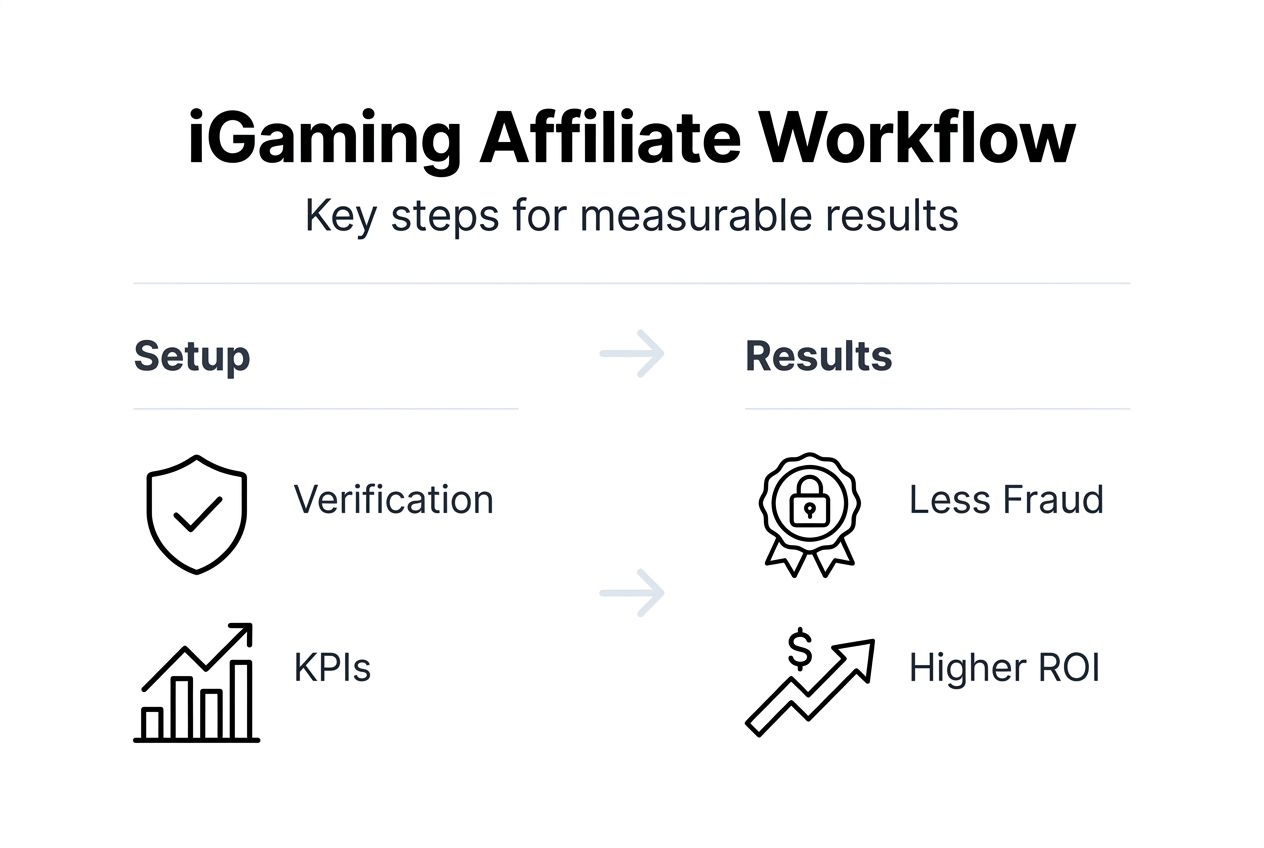
- Step 1: Affiliate Verification And Partner Selection
- Step 2: Implementing Performance Tracking And Measurement
- Step 3: Managing Affiliate Relationships And Communication
- Common Mistakes And Troubleshooting
- Expected Results And Success Metrics
- Alternative Approaches And Tradeoffs
- Explore Affiliate Roulette Solutions For IGaming Success
- Frequently Asked Questions
Key takeaways
| Point | Details |
|---|---|
| Verification reduces fraud drastically | 45% of affiliate marketers face fraud annually without proper verification tools |
| Real-time tracking enables data-driven decisions | Tracking latency under 5 minutes allows immediate optimization of campaign performance |
| Structured communication cuts affiliate churn by 20% | Regular updates and feedback loops reduce affiliate churn by approximately 20% |
| Clear KPIs measure program success within 3 months | CPA, conversion rate, and ROAS metrics become measurable within 3 months of launch |
Prerequisites: what you need before starting
Before launching an optimized affiliate marketing workflow, secure the right infrastructure and knowledge. Without these foundations, even the best strategies fail.
First, identify verification platforms tailored for iGaming. These systems check affiliate legitimacy, reducing fraud exposure from day one. Second, set up performance tracking software with dashboard functionality that refreshes in near real time. Delayed data means missed opportunities. Third, understand gambling compliance basics for your jurisdiction since legal requirements in iGaming affiliate marketing vary globally and violations carry steep penalties.
You also need reliable communication tools for ongoing affiliate engagement. Email automation, Slack channels, or dedicated partner portals keep information flowing. Finally, allocate budget for technology and management resources. Quality affiliate marketing software for iGaming costs money, but the ROI from reduced fraud and improved tracking justifies the investment.
Essential checklist:
- Affiliate verification platform subscription
- Real-time tracking dashboard with API integration
- Compliance documentation for target markets
- Communication and CRM tools for partner management
- Budget allocation for software, training, and ongoing support
Understanding key ingredients for iGaming affiliate success helps you prioritize what to secure first. Start with verification and tracking since these directly impact revenue protection and performance measurement. Add communication tools next to support partner relationships. Build your affiliate listings for iGaming only after establishing this foundation, ensuring you attract quality partners from launch.
Pro Tip: Test your tracking system with a small partner cohort before full rollout. This surfaces integration issues early when fixes are cheaper and faster.
Step 1: affiliate verification and partner selection
Verifying affiliates before onboarding protects your program from fraud and reputation damage. Start by using verified affiliate publisher directories that pre-screen applicants. These directories flag suspicious activity patterns before partners join your network.
Implement customized KYC procedures for iGaming affiliates. Collect documentation proving business legitimacy, traffic source ownership, and compliance with gambling advertising regulations. Review each application manually during early program stages. As volume grows, automate initial screening but keep human review for high-value or questionable applications.
Continuously monitor affiliate traffic sources for anomalies. Sudden spikes in clicks without conversions, traffic from banned geographies, or bot-like behavior patterns signal potential fraud. Fighting fraud in iGaming affiliation requires vigilance since 45% of affiliate marketers reported encountering some form of partner fraud annually without verification tools.
Flag or reject suspicious affiliate accounts promptly. Document rejection reasons to build institutional knowledge about fraud patterns. Share anonymized fraud data with other operators through industry forums to strengthen collective defenses.
Verification workflow:
- Pre-screen applicants through verified directories
- Collect and verify KYC documentation
- Review traffic source legitimacy and compliance
- Monitor ongoing traffic patterns for anomalies
- Document and act on suspicious activity immediately
Pro Tip: Create a tiered approval system where new affiliates start with lower commission rates and limited access. Upgrade them after proving legitimate traffic and conversion quality over 60-90 days.
Step 2: implementing performance tracking and measurement
Accurate tracking transforms guesswork into data-driven optimization. Integrate tracking systems with latency under 5 minutes so you spot trends while campaigns are active, not after budgets drain.
Define and prioritize KPIs that matter for iGaming: CPA (cost per acquisition), conversion rate, ROAS (return on ad spend), and traffic quality. Setting clear KPIs such as CPA, conversion rate, and ROAS allows operators to measure success quantitatively within 3 months. Track these metrics per affiliate, per traffic source, and per campaign for granular insights.
Use centralized affiliate management platforms to minimize manual errors. Manual tracking through spreadsheets creates version control nightmares and data gaps. Platforms sync data automatically, reducing discrepancies between your records and affiliate dashboards.

Perform regular data audits to ensure tracking integrity. Broken tracking links, cookie deletion issues, or attribution conflicts cost revenue. Schedule weekly checks during launch and monthly reviews once systems stabilize. Understanding real-time tracking importance helps prioritize these audits.
Tracking implementation steps:
- Select tracking platform with sub-5-minute latency
- Define primary KPIs: CPA, conversion rate, ROAS, traffic quality
- Configure automated dashboards for each affiliate
- Set up alert triggers for anomalies or underperformance
- Schedule regular audits to verify data accuracy
- Train team on dashboard interpretation and optimization
| Metric | Target Range | Review Frequency |
|---|---|---|
| CPA | $50-$150 | Daily |
| Conversion Rate | 2-8% | Daily |
| ROAS | 300-500% | Weekly |
| Traffic Quality Score | 7-10/10 | Weekly |
Mastering KPIs for iGaming affiliates requires comparing performance across partners to identify outliers. Top performers teach you what works while bottom performers show what to avoid or fix.
Pro Tip: Create custom conversion events beyond just signups. Track deposit amounts, gameplay duration, and customer lifetime value to distinguish high-quality traffic from volume players.
Step 3: managing affiliate relationships and communication
Strong relationships keep affiliates engaged and productive. Schedule regular updates and performance meetings with affiliates, even when things run smoothly. Monthly calls for top performers and quarterly check-ins for others maintain connection.
Create structured feedback loops to gather affiliate input. Ask what promotional materials they need, which campaigns perform best, and what obstacles they face. This intelligence shapes your content calendar and resource allocation.
Share performance data transparently to foster trust and collaboration. Show affiliates their metrics compared to anonymized program averages. Transparency motivates improvement and builds loyalty since partners see you value their contribution.
Act quickly to resolve partner issues to minimize churn. Payment delays, broken tracking links, or unanswered questions drive affiliates to competitors. Establishing clear communication protocols, including regular updates and feedback loops, reduces affiliate churn rates by approximately 20%. Response time matters more than having perfect answers immediately.
Communication framework:
- Weekly performance email summaries for all active affiliates
- Monthly video calls with top 20% of partners
- Quarterly surveys gathering feedback and suggestions
- Dedicated Slack or support channel for urgent issues
- Public changelog announcing platform updates and new tools
Building strong casino affiliate partnerships requires treating affiliates as revenue partners, not vendors. Share wins publicly, provide early access to new offers, and recognize top performers with bonuses or exclusive opportunities.
Pro Tip: Create an affiliate advisory board with your top 5-10 partners. Meet quarterly to discuss program direction, new features, and market trends. This insider group provides strategic guidance while strengthening key relationships.
Common mistakes and troubleshooting
Even well-planned workflows fail when operators make preventable mistakes. Neglecting fraud detection leads to high program risk. Some operators skip verification to grow faster, but 45% of affiliate marketers encounter partner fraud annually without proper verification. The revenue lost from fraud exceeds the time saved skipping checks.
Ignoring compliance undermines trust and performance. Gambling regulations change frequently. Failing to update affiliate guidelines after regulatory shifts exposes both you and partners to penalties. Review compliance requirements quarterly and communicate changes immediately.
Delaying data review causes missed optimization opportunities. Checking performance weekly instead of daily means campaigns bleed budget for days before you react. Set dashboard alerts that notify you when metrics drift outside acceptable ranges.
Poor communication drives affiliate churn and disengagement. Unanswered emails, delayed payments, or unclear guidelines frustrate partners. They leave for competitors offering better support even if your commission rates are higher.
Troubleshooting checklist:
- Fraud spike: Audit recent affiliate approvals and tighten verification
- Tracking discrepancies: Run technical audit of pixel implementation and cookie settings
- Low conversion rates: Review landing page quality and traffic source relevance
- High churn: Survey exiting affiliates and address top 3 complaints within 30 days
- Compliance issues: Consult legal counsel and update terms within 48 hours
Avoiding common mistakes in iGaming affiliate marketing requires proactive monitoring and rapid response. Build systems that surface problems automatically rather than relying on manual discovery.
Expected results and success metrics
Implementing a structured workflow delivers measurable improvements within months. Expect reduction in affiliate fraud incidence by up to 50% after implementing verification and monitoring systems. Fraudulent traffic costs drop while conversion quality rises.
You should see 20% improvement in affiliate retention through structured communication. Partners stay longer when they feel supported and valued, reducing recruitment costs and stabilizing revenue.
KPIs like CPA, conversion rate and ROAS are measurable within 3 months of workflow optimization. Initial benchmarks establish baselines for ongoing improvement. Most programs see 15-30% performance gains in the first quarter after implementing proper tracking and communication.
Centralized management platforms reduce manual errors by approximately 40%. Automation eliminates data entry mistakes and ensures consistency across reporting.
| Metric | Before Optimization | After 3 Months | Improvement |
|---|---|---|---|
| Fraud Rate | 8-12% | 4-6% | 50% reduction |
| Affiliate Churn | 25-30% quarterly | 20-24% quarterly | 20% improvement |
| Manual Error Rate | 12-15% | 7-9% | 40% reduction |
| Time to Revenue | 90-120 days | 60-75 days | 25-40% faster |
Tracking iGaming affiliate KPIs consistently reveals which changes drive results versus which waste resources. Document baseline metrics before optimization begins so you can demonstrate ROI to stakeholders.
Pro Tip: Create monthly performance reports comparing current metrics to pre-optimization baselines. This documentation justifies continued investment in tools and proves workflow value to leadership.
Alternative approaches and tradeoffs
No single workflow structure fits every operator. Direct affiliate management offers control and fraud prevention but requires higher complexity. You hire in-house teams, build custom tools, and handle all partner relationships directly. This approach suits established operators with resources for dedicated affiliate teams.
Third-party network workflows reduce overhead but add costs and limit direct control. Networks handle verification, tracking, and payments while you focus on offers and strategy. You pay network fees but save on infrastructure and staffing. This works well for newer operators testing affiliate channels before building internal capabilities.
Each model trades control for operational simplicity and cost efficiency. Direct management maximizes profit per conversion but demands more time and expertise. Networks provide faster launch and lower upfront costs but take percentage cuts that reduce margins.
| Approach | Control Level | Setup Time | Ongoing Cost | Best For |
|---|---|---|---|---|
| Direct Management | High | 3-6 months | High | Established operators with dedicated teams |
| Hybrid Model | Medium | 2-4 months | Medium | Growing operators scaling affiliate programs |
| Network Only | Low | 2-4 weeks | Low upfront, high percentage | New operators testing viability |
Contextual selection depends on operator size, resources, and fraud tolerance. Smaller operators often start with networks then transition to hybrid or direct models as revenue justifies infrastructure investment. Understanding iGaming affiliate workflow alternatives helps match strategy to current capabilities.
Key considerations:
- Budget: Direct management needs $50k-$100k+ annual technology and staffing investment
- Speed: Networks launch in weeks versus months for direct builds
- Control: Direct management allows custom rules and immediate changes
- Expertise: Networks provide built-in compliance and fraud knowledge
Navigating legal and ethical challenges in affiliate workflows becomes easier with experienced partners, whether internal teams or external networks. Evaluate your risk tolerance and resource availability before committing to one model.
Explore Affiliate Roulette solutions for iGaming success
Optimizing your workflow gets easier with specialized tools built for iGaming. Affiliate Roulette connects you with verified partners through curated listings that reduce fraud risk from first contact. Our real-time tracking integrations streamline performance measurement so you spot opportunities faster.
Access expert resources covering everything from maximizing ROI with iGaming affiliate marketing to navigating compliance complexities. Whether you’re launching your iGaming affiliate site or scaling existing casino affiliate partnerships, our platform provides the verification, tracking, and networking tools you need to build profitable relationships. Join thousands of operators and affiliates streamlining their workflows through transparent, data-driven partnerships.
Frequently asked questions
What tools are essential for optimizing an iGaming affiliate workflow?
You need four core tools: affiliate verification platforms to screen partners, real-time tracking software for performance measurement, compliance management systems to handle regulatory requirements, and communication tools for ongoing engagement. These work together to prevent fraud, measure results accurately, and maintain strong partner relationships.
How quickly can I expect to see measurable improvements in affiliate performance?
KPIs such as CPA, conversion rate, and ROAS can be measured quantitatively within 3 months of implementing proper tracking and workflows. Initial improvements in fraud reduction and partner engagement often appear within 30-60 days. Ongoing optimization after setup drives continuous performance gains over time.
What are common mistakes to avoid in iGaming affiliate workflows?
Skipping fraud prevention and compliance checks are critical errors. 45% of affiliate programs face fraud issues annually without verification processes. Other mistakes include delaying data reviews, which wastes ad spend on underperforming campaigns, and poor communication that drives valuable partners to competitors.
Should I build direct affiliate management or use third-party networks?
Your choice depends on resources and goals. Direct management offers maximum control and higher margins but requires significant upfront investment in technology and teams. Third-party networks provide faster launch and lower initial costs but take percentage cuts. Most operators start with networks then transition to direct management as revenue justifies infrastructure costs.
Recommended
Comments
You must be logged in to leave a review.